
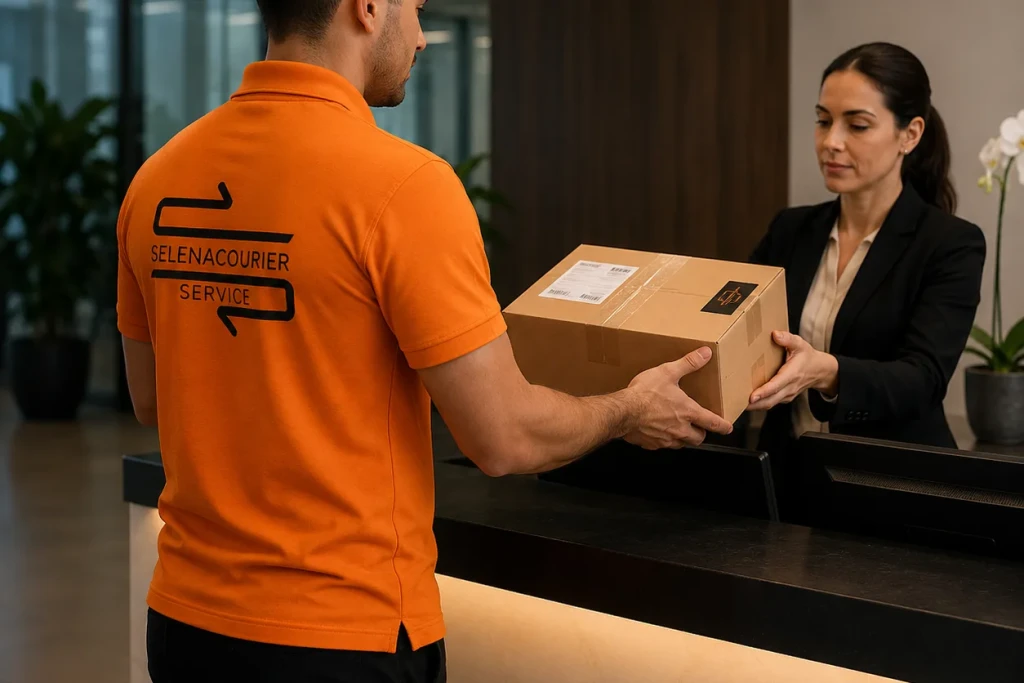
Every Delivery Says Something About Your Business
Businesses invest significant time and resources into creating a positive client experience.
They refine their products, train their teams, improve communication and carefully build their reputation. Marketing campaigns are planned months in advance. Customer service processes are reviewed regularly. Every interaction is designed to leave the right impression.
However, one important part of the customer journey is often overlooked.
The delivery.
For many businesses, the courier is the last person a client interacts with before forming a final opinion about the company. Whether the delivery contains legal documents, fresh bakery products, medical supplies, luxury retail items or campaign materials, the experience surrounding that delivery influences how the business is remembered.
At Selena Courier Service, we have learned that clients rarely judge a delivery by speed alone.
Instead, they remember whether everything felt organised.
Was communication clear?
Did the delivery arrive when expected?
Was the handover professional?
Did somebody take ownership when plans changed?
These moments shape confidence.
After nearly twenty years supporting businesses across London, we no longer see delivery as simply transporting items from one location to another.
We see it as an extension of the client’s brand.
Because when businesses trust us with their deliveries, they are also trusting us with their reputation.
The Delivery Is Often the Final Stage of Customer Experience
Many organisations think about customer experience in terms of sales, service and support.
The reality is that customer experience continues until the delivery has been completed.
Imagine ordering a premium product.
The purchasing process is smooth.
Communication is excellent.
The product is beautifully packaged.
Then the final delivery feels rushed, confusing or poorly communicated.
The customer’s memory of the experience changes immediately.
The opposite is equally true.
A professional, well-managed delivery reinforces confidence in the business behind it.
This is particularly important for organisations where presentation, timing and trust matter every day.
Luxury retailers want products presented professionally.
Law firms require confidential documents to reach the correct recipient securely.
Healthcare providers depend on clear communication between clinics, laboratories and patients.
PR agencies often work towards campaign launches where deliveries support journalists, influencers, event venues and brand teams simultaneously.
Although these industries appear very different, they share one common expectation.
They want the delivery experience to reflect the standards of their own business.
That expectation has very little to do with simply moving parcels across London.
It has everything to do with protecting the client’s reputation.
What Clients Rarely See Behind a Successful Delivery
One of the biggest misconceptions about logistics is that successful deliveries are created on the road.
In reality, most successful deliveries begin long before a courier reaches the collection point.
This is something we discuss regularly during our operational reviews.
Before assigning any collection, our coordination team asks questions that many clients never see.
Is the collection address fully accessible?
Are there loading restrictions?
Does reception require advance notification?
Who is authorised to receive the delivery?
Are there time-sensitive requirements?
Has the recipient been informed?
Is there an alternative contact if circumstances change?
None of these questions physically move a parcel.
However, every answer influences whether the delivery runs smoothly.
Over recent months, our internal meetings have focused heavily on improving these invisible parts of the delivery process.
Together with our coordination team, we have refined booking procedures, strengthened communication standards, improved client information within our CRM and reviewed how deliveries are allocated throughout the day.
From the outside, these improvements may appear administrative.
From an operational perspective, they directly influence delivery quality.
The more accurately we prepare before collection, the fewer problems develop during the journey.
That preparation allows our couriers to focus on what they do best representing our clients professionally while delivering confidently across London.
Why Delivery Standards Are Different Across Industries
One of the biggest misconceptions about logistics is that every delivery follows the same process.
In reality, every industry places different demands on its logistics partner because every delivery carries a different level of responsibility.
Over the years, we have supported businesses ranging from independent bakeries and luxury retailers to legal firms, healthcare providers and PR agencies. Although the items being transported are completely different, one principle remains the same.
The delivery is never just about the parcel.
It is about protecting the client’s business.
Take a bakery, for example.
The challenge is rarely driving from one location to another. Instead, it is ensuring products leave the bakery at the right moment, arrive while still at their best and fit around the customer’s production schedule. A perfectly driven route cannot recover lost freshness if the collection happens too early or too late.
The same principle applies in healthcare.
A medical collection is supported by communication before the courier arrives. Clinics need reassurance that the correct information has been received, the collection is understood and everyone involved knows what happens next. The courier becomes part of a much wider process involving practitioners, laboratories, pharmacies and patients.
Legal deliveries create a different responsibility.
Confidential documents often require named recipients, secure handovers and clear accountability. Success depends on accuracy just as much as speed.
PR campaigns introduce another challenge entirely.
Launches often involve multiple locations, journalists, influencers, event venues and strict deadlines. A courier may only see one collection, yet behind that booking sits months of planning by marketing and PR teams. In these situations, logistics becomes part of the campaign itself.
Every industry measures success differently.
However, they all expect the same outcome:
Confidence that their delivery reflects the standards of their business.
Inside Selena Operations
One topic appears repeatedly during our internal operational meetings.
It is not traffic.
It is not route optimisation.
It is not how quickly we can assign a courier.
Instead, we spend a surprising amount of time discussing information.
Can the courier access the building?
Has reception been informed?
Does the client have a preferred delivery contact?
Are there restrictions on vehicle access?
Has the recipient confirmed availability?
Recently, while reviewing our coordination processes with the team, we looked closely at how incomplete booking information creates unnecessary operational pressure.
In many cases, the courier performed exactly as expected.
The challenge began much earlier.
A loading bay had not been confirmed.
Reception closed earlier than expected.
The recipient had stepped into a meeting.
Building access instructions had not been included.
These are not driving problems.
They are communication problems.
As a result, we have continued refining how bookings are managed before they are assigned. Our coordinators now place greater emphasis on collecting complete information at the beginning of the process because every small detail helps create a smoother experience for both our clients and our couriers.
Most customers will never notice these conversations taking place.
That is exactly the point.
Strong logistics should feel effortless because the work has already happened behind the scenes.
Communication Creates Confidence
Many businesses assume that speed is the most valuable part of a courier service.
Speed is important.
However, experience has taught us that communication often matters even more.
Clients understand that London is unpredictable.
Roadworks appear without warning.
Traffic conditions change.
Collection times move.
Recipients become unavailable.
Unexpected situations are part of operating in one of the world’s busiest cities.
What clients value is knowing what is happening.
A simple update can remove uncertainty.
Clear communication allows businesses to make informed decisions, adjust their own schedules and keep their customers informed.
This is why we view communication as part of the delivery itself rather than an additional service.
Reliable delivery is not created by avoiding every challenge.
Reliable delivery is created by responding professionally when challenges arise.
CEO’s Perspective
Over nearly twenty years running Selena Courier Service, my understanding of logistics has changed completely.
When I first started the business, I believed success was measured by how quickly we could move something across London.
Today, I see it very differently.
I believe our real responsibility is helping businesses keep the promises they have already made to their own customers.
Every delivery represents somebody’s reputation.
Sometimes it is a legal deadline.
Sometimes it is a product launch.
Sometimes it is fresh food prepared before sunrise.
Sometimes it is medical equipment needed to support patient care.
The parcel itself is rarely the whole story.
What matters is everything surrounding it.
That is why we continue investing in better systems, stronger communication and continuous improvement.
Because when our clients succeed, we succeed with them.
The Difference Between a Courier and a Logistics Partner
As businesses grow, so do their expectations.
A company that books one delivery a month has very different needs from one coordinating collections across multiple locations, managing time-sensitive shipments or supporting client-facing operations every day.
At that stage, the conversation changes.
Businesses stop asking:
“Can you deliver this?”
Instead, they begin asking:
“Can you help us manage this more effectively?”
That is where the difference between a courier service and a logistics partner becomes clear.
A logistics partner looks beyond the individual delivery.
They understand recurring schedules.
They recognise operational pressures.
They identify risks before they become problems.
Most importantly, they become part of the client’s wider operation rather than simply completing a booking.
For many of our clients, the relationship evolves over time.
It often starts with a single delivery.
Then it becomes repeat collections.
Eventually, it develops into structured logistics support built around the way their business operates.
That progression is one of the strongest indicators that delivery has become part of the client’s overall customer experience.
Business Insight of the Week
Businesses rarely lose confidence because a courier encounters traffic.
They lose confidence when communication disappears.
Customers understand that unexpected situations happen.
What they remember is whether someone took ownership, communicated clearly and protected the experience they had worked hard to create.
Delivery is often the final interaction your customer has with your business.
Make sure it reflects the same standards as every interaction that came before it.
Practical Takeaway
If your business regularly relies on deliveries, it is worth asking a different set of questions.
Instead of focusing only on collection times or pricing, consider the wider experience.
- How are bookings managed before collection?
- Who keeps you informed if circumstances change?
- What procedures exist to reduce delivery risks?
- How are unexpected situations handled?
- Does your logistics partner understand your industry and your clients’ expectations?
The answers often reveal more about the quality of a logistics provider than delivery speed alone.
Reliable logistics is built on preparation, communication and accountability.
Those qualities protect both the delivery and the reputation behind it.
Conclusion
Every business works hard to earn its clients’ trust.
That trust is built through countless interactions.
Sales conversations.
Customer service.
Product quality.
Professional communication.
The delivery is part of that journey.
It is often the final moment a customer experiences before deciding how they feel about a business.
For that reason, logistics should never be viewed simply as transportation.
It should be viewed as an extension of the client experience.
At Selena Courier Service, that philosophy influences every decision we make.
Whether we are supporting a bakery before sunrise, coordinating a healthcare collection, delivering confidential legal documents or helping a PR agency prepare for a campaign launch, our objective remains the same.
To help our clients deliver confidence as well as parcels.
Because when delivery reflects the same care, professionalism and attention to detail as the rest of your business, it becomes far more than a completed journey.
It becomes part of the experience your customers remember.
Looking for a logistics partner who understands that delivery is part of your client experience?
Whether you require same-day courier services, healthcare logistics, legal deliveries, premium retail support or coordinated business deliveries across London, Selena Courier Service works alongside organisations that value professionalism, communication and operational reliability.
If you’re looking for a logistics partner rather than simply a courier, we’d be pleased to discuss how we can support your business.
or call us on 0203 6740409