
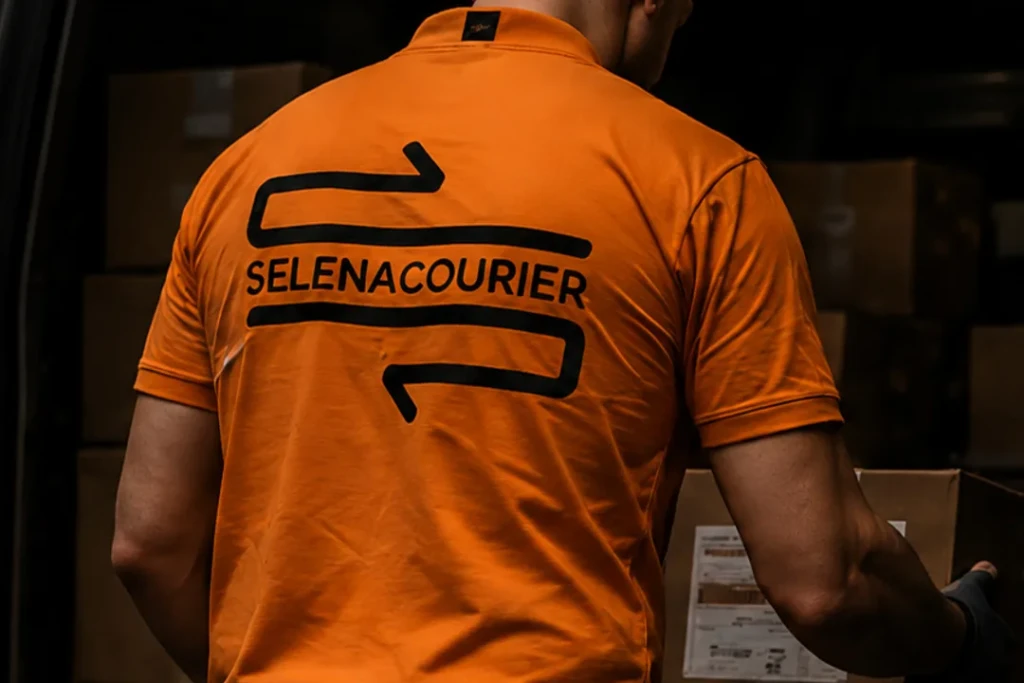
When businesses look for a same-day courier, the first question is usually about speed.
- How quickly can you collect?
- How soon can it arrive?
Those are sensible questions. Deadlines matter, especially when a campaign has one opportunity to make the right impression.
But after supporting businesses across London for nearly twenty years, we’ve found that speed is rarely what determines the success of a campaign.
The difference is almost always made earlier.
Long before the courier starts the engine.
Long before the first parcel is collected.
It happens during the conversations, the planning and the decisions that most people never see.
A successful campaign is rarely the result of one fast delivery.
It’s the result of dozens of small details coming together at exactly the right moment.
Business Observation
One pattern has become impossible to ignore.
The businesses that run the smoothest campaigns are not always the biggest, nor do they necessarily have the largest budgets.
They simply prepare better.
- Everyone understands their role.
- Delivery instructions are clear.
- Contacts are confirmed.
- Someone is responsible for every stage of the process.
When this happens, the campaign feels calm.
Not because nothing changes, but because everyone knows how to respond when it does.
Preparation creates confidence.
Confidence allows people to focus on the campaign rather than the logistics behind it.
The Difference Between Transport and Coordination
People often use the words courier and logistics as though they mean the same thing.
They don’t.
Transport is moving an item from one location to another.
Coordination is making sure that journey happens at the right time, in the right order and with the right people informed throughout.
The distinction might seem small.
In practice, it’s significant.
Imagine a campaign where marketing materials need to reach several locations across London before an afternoon product launch.
- One venue opens later than expected.
- Another has restricted access.
- A third asks for deliveries through a different entrance because of an event taking place nearby.
None of these changes require a faster vehicle.
They require someone who understands the wider picture and can adjust the plan without disrupting the campaign.
That’s coordination.
And it’s often the part clients remember long after the event has finished.
The Work That Nobody Sees
Every successful campaign has someone quietly connecting the dots.
That person may work in marketing.
They may be part of the operations team.
Or they may be the logistics coordinator.
Their role isn’t simply to arrange a courier.
It’s to reduce uncertainty.
Before collection has even taken place, they’re already confirming delivery addresses, checking contact details, reviewing access requirements and thinking about what could change during the day.
If several deliveries are involved, they’re considering the order in which they should happen.
If timings are tight, they’re looking for ways to protect the schedule without increasing pressure on the client.
Most of this work goes unnoticed.
Which is exactly the point.
Good coordination should feel invisible.
When clients don’t have to chase updates, repeat instructions or wonder what’s happening next, they can focus on their own responsibilities.
That’s where the real value lies.
Why Small Details Matter
In our experience, campaigns are rarely disrupted by one major mistake.
More often, they’re affected by a series of small details that nobody thought would matter.
- A missing mobile number.
- An incomplete postcode.
- An access code that wasn’t shared.
- A recipient who finishes for lunch fifteen minutes earlier than expected.
On their own, these issues seem insignificant.
Together, they can delay collections, interrupt schedules and create unnecessary pressure on everyone involved.
This is why preparation has become one of the most important parts of the way we work.
Every question asked before collection is one less problem to solve later.
Sometimes the simplest conversation is the one that prevents the biggest disruption.
Different Industries. The Same Expectations.
One of the advantages of working with businesses across different sectors is that you begin to notice patterns.
On the surface, a bakery, a legal practice, a healthcare provider and a PR agency appear to have very little in common.
- Their products are different.
- Their customers are different.
- Their priorities are different.
Yet when it comes to logistics, they often expect exactly the same things.
- They want reliability.
- They want clear communication.
- They want someone who takes ownership.
Most importantly, they want confidence that if something changes, it will be managed professionally.
A bakery cannot afford fresh products arriving late because every café and restaurant further down the route is affected.
A legal practice cannot risk confidential documents being delivered to the wrong person.
Healthcare providers rely on precise collections because delays can affect laboratories, clinics and patient care.
PR agencies have one opportunity to launch a campaign. Press packs, products and event materials need to arrive exactly where they are expected, often within narrow delivery windows.
Different industries.
The same expectation.
Someone needs to be thinking ahead.
Communication Is Part of the Delivery
One lesson we’ve learned over the years is that communication should never be treated as an extra service.
It’s part of the delivery itself.
Clients don’t only want to know that something has arrived.
They want confidence throughout the journey.
- Has the collection taken place?
- Has the recipient confirmed availability?
- Has anything changed?
- If there is a delay, what is being done about it?
Clear communication removes uncertainty.
And uncertainty is often what creates the most pressure during a busy campaign.
Many delivery problems can be managed successfully simply because the right people receive the right information at the right time.
Silence creates questions.
Communication builds trust.
Why We Train Coordinators to Think, Not Just Dispatch
Technology has transformed logistics.
- Route planning is faster.
- Tracking is more accurate.
- Customers can receive live updates throughout the journey.
These improvements are valuable.
But technology cannot replace judgement.
Every member of our coordination team is encouraged to think beyond the booking itself.
Rather than simply accepting information, we ask questions.
- Has every contact number been checked?
- Is there anyone else who should receive updates?
- Does the building have delivery restrictions?
- Could traffic, road closures or local events affect today’s schedule?
- Would changing the delivery sequence reduce unnecessary risk?
None of these questions take long to ask.
Yet together they can make a significant difference to how smoothly a campaign runs.
Experience teaches you that successful logistics is rarely about reacting quickly.
It’s about anticipating what might happen before it does.
Lessons From the Field
Every campaign adds to our understanding of how businesses operate.
We’ve noticed that the organisations with the strongest internal communication usually experience the fewest delivery issues.
- Instructions are shared clearly.
- Responsibilities are understood.
- Decisions are made quickly because everyone knows who owns them.
- When challenges arise, solutions are found without unnecessary delays.
The opposite is also true.
When information is incomplete, responsibilities are unclear or assumptions are made, even straightforward deliveries can become unnecessarily complicated.
The lesson isn’t really about logistics.
It’s about business.
Good operations reduce pressure.
Poor communication increases it.
That principle applies far beyond deliveries.
CEO Perspective
When I founded Selena Courier Service nearly twenty years ago, I believed our role was simple.
- Collect.
- Deliver.
- Repeat.
Experience has changed that view completely.
Today, I see logistics as a responsibility rather than a transaction.
Every booking represents someone’s deadline, someone’s client relationship or someone’s reputation.
That changes the way you approach even the smallest delivery.
You become more curious.
You ask more questions.
You prepare more carefully.
And you stop measuring success only by how quickly something arrives.
Success is when the client never has to wonder whether everything is under control.
Because they already know it is.
Business Insight
Businesses often compare logistics providers by asking the same questions.
- How quickly can you collect?
- How much does it cost?
- How soon can it arrive?
These questions are important, but they don’t always reveal what will make the biggest difference when a campaign is under pressure.
A more useful question is: who is managing the delivery once the booking has been made?
When campaigns involve several collections, multiple delivery locations or changing schedules, coordination becomes just as valuable as transport itself.
The companies that consistently deliver successful campaigns rarely rely on speed alone.
They rely on preparation, communication and people who take ownership from beginning to end.
Campaign Planning Checklist
Before your next campaign, take a few minutes to review the logistics plan.
Before collection
- Have all delivery addresses been checked?
- Does every location have a named contact?
- Have mobile numbers been confirmed?
- Are delivery windows realistic?
- Have access instructions been shared?
During the campaign
- Is one person responsible for overseeing every delivery?
- Does everyone know who to contact if plans change?
- Are recipients receiving updates when needed?
After completion
- Were there any delays or unexpected challenges?
- What could be improved for the next campaign?
- Has useful feedback been shared with everyone involved?
The most successful campaigns are rarely perfect.
They’re simply well prepared.
About Selena Courier Service
For nearly twenty years, Selena Courier Service has supported businesses across London with time-critical logistics.
From product launches and PR campaigns to confidential legal deliveries, healthcare logistics and specialist business transport, our role is simple.
To help our clients work with confidence.
Every delivery is managed with the same principles that have shaped our business since 2007.
- Preparation.
- Communication.
- Ownership.
- Consistency.
Conclusion
Campaigns are remembered for their creativity, their impact and the experience they create.
The logistics behind them should feel almost invisible.
That doesn’t happen by chance.
It happens when every stage of the journey has been planned carefully, communication is clear and someone takes responsibility from beginning to end.
Speed will always matter.
But successful campaigns depend on much more than how quickly a vehicle can travel across London.
They depend on people who understand that great logistics starts long before collection.