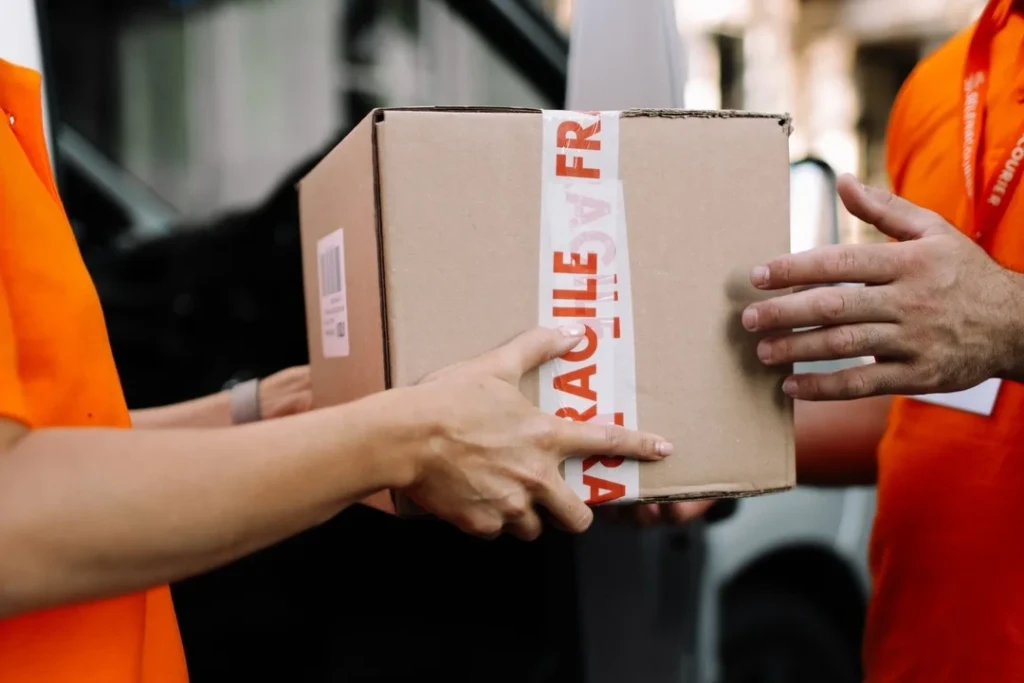
For many businesses, the courier relationship starts with a single booking. Something needs to cross London today, a courier collects it and the job is done.
Then it happens again. And again. The same collection every morning. The same five addresses every Thursday. The same instructions about the side entrance, the named recipient and the box that must stay upright.
At some point the business is no longer buying individual deliveries. It is running a delivery operation, whether it planned to or not. The real question is who is managing it.
This article looks at the signs that a business has outgrown one-off bookings, and at what changes when a recurring courier service in London starts to understand the operation rather than only the next job.
Key Takeaways
- Repeated bookings are often a delivery operation that nobody has designed.
- The hidden cost is staff time: booking, explaining, chasing and rebuilding the same work.
- A recurring service replaces repeated instructions with known requirements and briefed couriers.
- Contingency and holiday cover should be planned before they are needed.
- The relationship can grow step by step, from a first booking to a delivery partnership.
From One Booking to a Delivery Partnership
Most delivery relationships pass through the same four stages. Few businesses plan the move. It tends to happen because the work keeps coming back.
One booking
A single movement with a clear collection, destination and deadline. The provider needs a good brief for that job and nothing more.
Recurring requirement
The same kind of job returns regularly. Instructions start to repeat, and the value of the courier knowing them in advance becomes obvious.
Managed route
Regular collections and drops are organised into a planned route, often multi-drop, with agreed windows, a standard proof of delivery and a known group of couriers.
Embedded delivery partnership
The provider understands how the client’s business works: its peaks, its contacts, its exceptions and its standards. Delivery becomes part of the client’s operation rather than a service booked from outside it.
Each stage is valid. The difficulty starts when a business is operating at the third or fourth stage while still being served as if every job were the first.
Signs You Have Outgrown One-Off Bookings
The clearest signs are rarely failed deliveries. They are the small, repeated tasks that land on the client’s own team.
- Booking the same jobs every day or week, one at a time.
- Explaining the same access, handling and recipient instructions to a different courier each time.
- Chasing drivers for arrival times that nobody has sent.
- Rebuilding the same route whenever volumes change.
- Arranging holiday or sickness cover at short notice.
- Absorbing sudden changes in volume around launches, seasons or events.
- Dealing with exceptions yourself because nobody else knows the background.
None of these tasks is difficult on its own. Together they take time that should be spent on the business itself, and every repetition is another chance for a detail to be missed.
What Changes When a Courier Understands Your Operation
A recurring courier service is not simply the same courier booked more often. The difference is the knowledge that builds up around the work.
- Known requirements: collection times, handling rules and recipients are recorded once and applied every time.
- Route knowledge: entrances, loading rules, parking and building contacts are learned and kept, not rediscovered.
- A briefed courier pool: the couriers who work on the account know the requirements before they arrive.
- Written procedures: the way the work is done is agreed and documented, so it does not depend on one person’s memory.
- Contingency planning: backup couriers, vehicles and holiday cover are arranged in advance.
- Regular coordination: one team owns the schedule, communicates changes and closes each day’s work.
- Exception management: when something changes, the provider already has the context to recommend a solution.
- Continuous improvement: what nearly went wrong is reviewed, and the process improves over time.
The same premium courier standards apply to every job on the route. The client keeps control of the requirement. What disappears is the need to supervise every movement.
Inside Selena
We usually begin by learning the operation before discussing price: what moves, when, to whom, what goes wrong today and what the client’s team would like to stop doing.
From there we recommend the simplest arrangement that fits. That may be ad-hoc bookings with recorded instructions, a planned route, or one of our Embedded Delivery Solutions, where the delivery layer is designed around the client’s workflow.
What Recurring Work Has Taught Us
Our view of recurring delivery comes from the work itself. The examples below are anonymised.
Morning routes for a bakery
For a bakery, every morning delivery affects the customers of the cafés and restaurants it supplies. Consistency matters more than raw speed.
The value comes from dependable morning deliveries, couriers who know each drop, and planning for seasonal peaks well before they arrive rather than on the day.
Holiday cover as the start of a relationship
Over the summer, several existing clients asked us for extra support because of staff holidays, temporary capacity gaps or seasonal volume.
It showed how temporary cover can become the start of recurring work. Once a provider has learned the job properly, it is often easier for the client to keep that knowledge in place than to hand the work back and start again next time.
Backup capacity for a florist
A London florist asked us to provide cover alongside its existing courier. We did not propose a wholesale switch.
The plan starts with a single paid trial. Before it runs, we agree what each booking must include, the access arrangements at key venues, a named coordinator and a shared communication channel. The service is extended only after the first completed job has been reviewed with the client.
Elena's Perspective
Our strongest client relationships were not built by one perfect delivery. They were built by learning how the client works: their seasonal pressure, the weeks when their own team is stretched and the details that never appear on a booking form.
Once we know that, we can plan for it. That is the point at which a courier stops being a supplier the client has to manage and becomes part of how the business runs.
How to Move From Bookings to a Managed Arrangement
The move does not require a long contract or a large change on the first day. A controlled approach usually works best:
- Map the current work: which deliveries repeat, when, where and with what instructions.
- Identify the pressure points: where time is lost, what gets chased and what has gone wrong.
- Agree the requirements and write them down as a simple procedure.
- Start with a defined route, trial period or cover arrangement.
- Review after the first weeks: what worked, what needs adjusting and what else could be handed over.
- Extend the arrangement only when the evidence supports it.
Recurring and urgent work can sit side by side. A managed route can run every morning while one-off same-day jobs are still booked as they arise, handled by a team that already knows the business.
If your team spends time booking, briefing and chasing the same deliveries, discuss your regular delivery requirements with us. We will look at the pattern and suggest the simplest arrangement that removes the pressure.